
Sophocles is one of three ancient Greek tragedians whose plays have survived. His first plays were written later than those of Aeschylus, and earlier than or contemporary with those of Euripides. Sophocles wrote 120 plays during the course of his life, but only seven have survived in a complete form: Ajax, Antigone, The Women of Trachis, Oedipus the King, Electra, Philoctetes and Oedipus at Colonus. For almost 50 years, Sophocles was the most celebrated playwright in the dramatic competitions of the city-state of Athens that took place during the religious festivals of the Lenaea and the Dionysia. He competed in 30 competitions, won 18, and was never judged lower than second place. Aeschylus won 14 competitions, and was sometimes defeated by Sophocles, while Euripides won 5 competitions.
The most famous tragedies of Sophocles feature Oedipus and also Antigone: they are generally known as the Theban plays, although each play was actually a part of a different tetralogy, the other members of which are now lost. Sophocles influenced the development of the drama, most importantly by adding a third actor, thereby reducing the importance of the chorus in the presentation of the plot. He also developed his characters to a greater extent than earlier playwrights such as Aeschylus.
Oedipus Rex
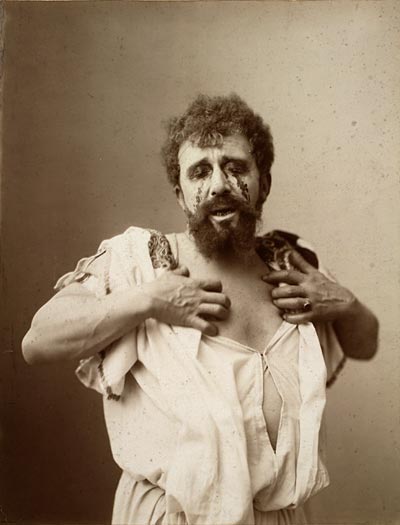
Oedipus Rex, also known by its Greek title, Oedipus Tyrannus , or Oedipus the King, is an Athenian tragedy by Sophocles that was first performed around 429 BC. Originally, to the ancient Greeks, the title was simply Oedipus (Οἰδίπους), as it is referred to by Aristotle in the Poetics. It is thought to have been renamed Oedipus Tyrannus to distinguish it from Oedipus at Colonus. In antiquity, the term “tyrant” referred to a ruler, but it did not necessarily have a negative connotation.
Of his three Theban plays that have survived, and that deal with the story of Oedipus, Oedipus Rex was the second to be written. However, in terms of the chronology of events that the plays describe, it comes first, followed by Oedipus at Colonus and then Antigone.
Drama

Drama is the specific mode of fiction represented in performance. The term comes from a Greek word meaning "action" , which is derived from "to do" . The two masks associated with drama represent the traditional generic division between comedy and tragedy. They are symbols of the ancient Greek Muses, Thalia, and Melpomene. Thalia was the Muse of comedy (the laughing face), while Melpomene was the Muse of tragedy (the weeping face). Considered as a genre of poetry in general, the dramatic mode has been contrasted with the epic and the lyrical modes ever since Aristotle's Poetics (c. 335 BCE)—the earliest work of dramatic theory.
In English (as was the analogous case in many other European languages), the word "play" or "game" (translating the Anglo-Saxon plèga or Latin ludus) was the standard term used to describe drama until William Shakespeare's time—just as its creator was a "play-maker" rather than a "dramatist" and the building was a "play-house" rather than a "theatre." The use of "drama" in a more narrow sense to designate a specific type of play dates from the modern era. "Drama" in this sense refers to a play that is neither a comedy nor a tragedy—for example, Zola's Thérèse Raquin (1873) or Chekhov's Ivanov (1887). It is this narrower sense that the film and television industries, along with film studies, adopted to describe "drama" as a genre within their respective media. "Radio drama" has been used in both senses—originally transmitted in a live performance, it has also been used to describe the more high-brow and serious end of the dramatic output of radio.

沒有留言:
張貼留言