
The New Testament is the second major part of the Christian biblical canon, the first part being the Old Testament, based on the Hebrew Bible. The New Testament discusses the teachings and person of Jesus, as well as events in first-century Christianity. Christians regard both the Old and New Testaments together as sacred scripture. The New Testament (in whole or in part) has frequently accompanied the spread of Christianity around the world. It reflects and serves as a source for Christian theology and morality. Both extended readings and phrases directly from the New Testament are also incorporated (along with readings from the Old Testament) into the various Christian liturgies. The New Testament has influenced religious, philosophical, and political movements in Christendom and left an indelible mark on literature, art, and music.
The New Testament is an anthology, a collection of Christian works written in the common (Koine) Greek language of the first century, at different times by various writers, who were early Jewish followers of Jesus, and the modern consensus is that it also provides important evidence regarding Judaism in the first century AD. In almost all Christian traditions today, the New Testament consists of 27 books. The original texts were written in the first and perhaps the second centuries of the Christian Era, in Greek, which was the common language of the Eastern Mediterranean from the Conquests of Alexander the Great (335–323 BC) until the Muslim conquests in the 7th century AD. All the works that eventually became incorporated into the New Testament are believed to have been written no later than around 150 AD, and a small minority of scholars would date them to no later than 70 AD.] John A. T. Robinson, Dan Wallace, and William F. Albright dated all the books of the New Testament before 70 AD. Others give a final date of 80 AD, or at 96 AD.
Genre
Genre, "kind" or "sort", from Latin genus (stem gener-),is any category of literature, music, or other forms of art or entertainment, whether written or spoken, audio or visual, based on some set of stylistic criteria. Genres form by conventions that change over time as new genres are invented and the use of old ones is discontinued. Often, works fit into multiple genres by way of borrowing and recombining these conventions.
Genre began as an absolute classification system for ancient Greek literature. Poetry, prose, and performance each had a specific and calculated style that related to the theme of the story. Speech patterns for comedy would not be appropriate for tragedy, and even actors were restricted to their genre under the assumption that a type of person could tell one type of story best. In later periods genres proliferated and developed in response to changes in audiences and creators. Genre became a dynamic tool to help the public make sense out of unpredictable art. Because art is often a response to a social state, in that people write/paint/sing/dance about what they know about, the use of genre as a tool must be able to adapt to changing meanings.
Sitcom

A situation comedy, or sitcom, is a genre of comedy centered on a fixed set of characters who carry over from episode to episode. Sitcoms can be contrasted with sketch comedy where a troupe may use new characters in each sketch, and stand-up comedy where a comedian tells jokes and stories to an audience. Sitcoms originated in radio, but today are found mostly on television as one of its dominant narrative forms. This form can also include mockumentaries.
A situation comedy television program may be recorded in front of a studio audience, depending on the program's production format. The effect of a live studio audience can be imitated or enhanced by the use of a laugh track.
Adam and Eve

Adam and Eve, according to the creation myth of the Abrahamic religions,were the first man and woman and the ancestors of all humans.[6] The story of Adam and Eve is central to the belief that God created human beings to live in a paradise on earth, although they fell away from that state and formed the present world full of suffering and injustice. It provides the basis for the belief that humanity is in essence a single family, with everyone descended from a single pair of original ancestors. It also provides much of the scriptural basis for the doctrines of the fall of man and original sin that are important beliefs in Christianity, but which are not generally held in Judaism or Islam.
In the Book of Genesis of the Hebrew Bible, chapters one through five, there are two creation narratives with two distinct perspectives. In the first, Adam and Eve are not mentioned (at least not mentioned by name). Instead, God created humankind in God's image and instructed them to multiply and to be stewards over everything else that God had made. In the second narrative, God fashions Adam from dust and places him in the Garden of Eden. Adam is told that he can till the ground and eat freely of all the trees in the garden, except for a tree of the knowledge of good and evil. Subsequently, Eve is created from one of Adam's ribs to be Adam's companion. They are innocent and unashamed about their nakedness. However, a serpent deceives Eve into eating fruit from the forbidden tree, and she gives some of the fruit to Adam. These acts give them additional knowledge, but it gives them the ability to conjure negative and destructive concepts such as shame and evil. God later curses the serpent and the ground. God prophetically tells the woman and the man what will be the consequences of their sin of disobeying God. Then he banishes them from the Garden of Eden.
Extra information
Jane Eyre and No Strings Attached
Jane Eyre
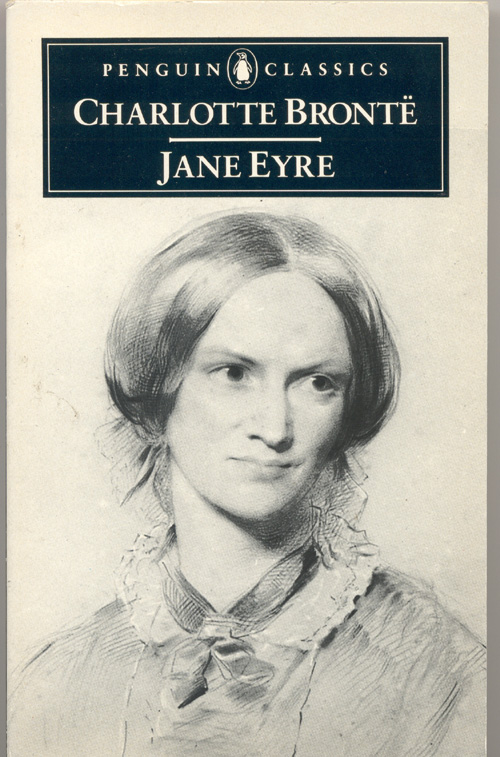
Jane Eyre (originally published as Jane Eyre: An Autobiography) is a novel by English writer Charlotte Brontë. It was published on 16 October 1847, by Smith, Elder & Co. of London, England, under the pen name "Currer Bell." The first American edition was published the following year by Harper & Brothers of New York.
Primarily of the Bildungsroman genre, Jane Eyre follows the emotions and experiences of its eponymous heroine, including her growth to adulthood and her love for Mr. Rochester, the Byronic master of fictitious Thornfield Hall. In its internalisation of the action—the focus is on the gradual unfolding of Jane's moral and spiritual sensibility, and all the events are coloured by a heightened intensity that was previously the domain of poetry—Jane Eyre revolutionised the art of fiction. Charlotte Brontë has been called the 'first historian of the private consciousness' and the literary ancestor of writers like Joyce and Proust. The novel contains elements of social criticism, with a strong sense of morality at its core, but is nonetheless a novel many consider ahead of its time given the individualistic character of Jane and the novel's exploration of classism, sexuality, religion, and proto-feminism.
No Strings Attached

No Strings Attached is a 2011 American romantic comedy film directed by Ivan Reitman and written by Elizabeth Meriwether. Starring Natalie Portman and Ashton Kutcher, the film is about two friends who decide to make a pact to have "no strings attached" casual sex without falling in love with each other. The film was released in the United States on January 21, 2011.

沒有留言:
張貼留言